
Skip to main content Deutsch

Neurosurgical spinal disorders

The spine (Latin: columna vertebralis) consists of 24 individual vertebrae (vertebrae) connected by 23 movable intervertebral discs (discus intervertebralis), as well as 8 to 10 vertebrae fused into the sacrum and coccyx.

Degenerative spinal diseases include lumbar (LWS), thoracic (BWS), or cervical (HWS) disc herniations, spinal canal stenoses, spinal tumors, and spondylolisthesis (slippage of vertebrae), which can also cause narrowing (stenosis) of the spinal canal.

Our clinic offers the full spectrum of spinal neurosurgery. To ensure modern and highly qualified treatment, a dedicated Spinal Board has been established.

Neurosurgical spinal disorders include:
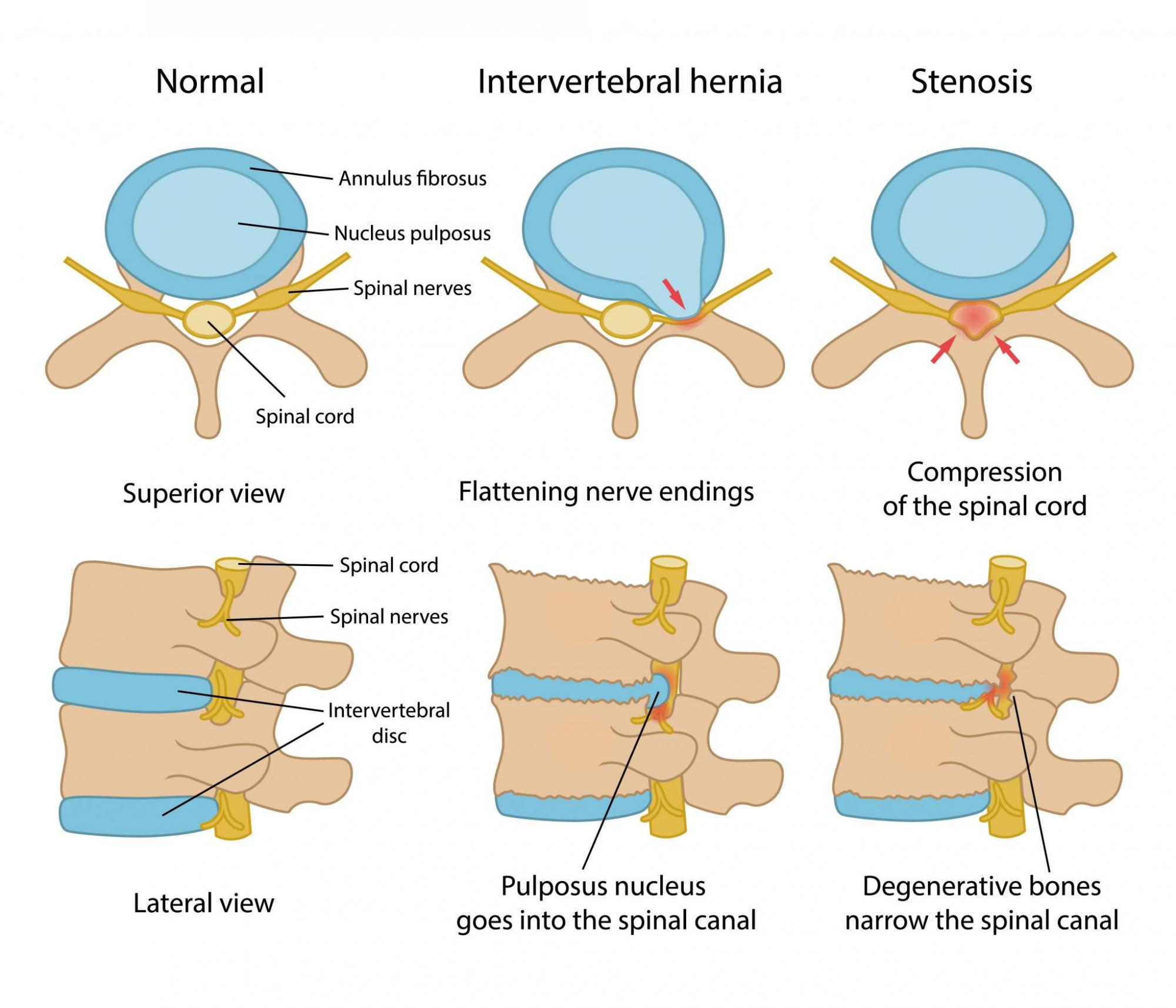
In a herniated disc (prolapse), a tear occurs in the annulus fibrosus, the fibrous ring surrounding the gelatinous disc material, allowing the disc tissue to protrude into the spinal canal, where the spinal cord is located. Initially, only localized pain is felt. If the nerve roots are affected, radiating pain or even weakness/paralysis in the arms or legs—typical symptoms of a disc herniation—can occur.

Lumbar disc herniation is one of the most common indications for surgery in neurosurgery.

Congenital or acquired spinal canal stenosis, also called vertebrostenosis, is a narrowing of the spinal canal formed by the stacked vertebrae, which houses the spinal cord protected by the meninges. This narrowing compresses the spinal cord.

Foraminal stenosis refers to the narrowing of the nerve roots at the foramina, the exit points where nerves leave the spinal canal. In the lumbar spine, bundled nerve roots exit the spinal canal in pairs, left and right, through the neuroforamina, bony openings in the vertebrae.

Spinal stenoses are typical degenerative conditions, mostly affecting older adults. With aging, there is wear, thickening, and degeneration of joints and bones. The typical symptoms of spinal stenosis, similar to those of a disc herniation, include radiating back pain into the arms or legs, fine motor and gait disturbances, sensory deficits, and weakness or paralysis.

Conservative therapy is the first-line treatment for stenosis and may include occupational therapy, physiotherapy exercises, heat therapy or massage, and pain-relieving or anti-inflammatory medication. If pain relief and improved mobility are not achieved, a minimally invasive surgical procedure is performed, during which bony spinal structures compressing the spinal cord and nerves are removed.

  • Spondylitis / Spondylodiscitis
  • Non-specific back pain
  • Spinal tumors and metastases: extradural, intradural extramedullary and intramedullary
  • Vertebral fractures
  • Radiculopathies / Myelopathies