
Vascular neurosurgery includes endovascular catheter techniques, open microsurgical procedures, and combinations of both methods for the treatment of vascular malformations in the brain
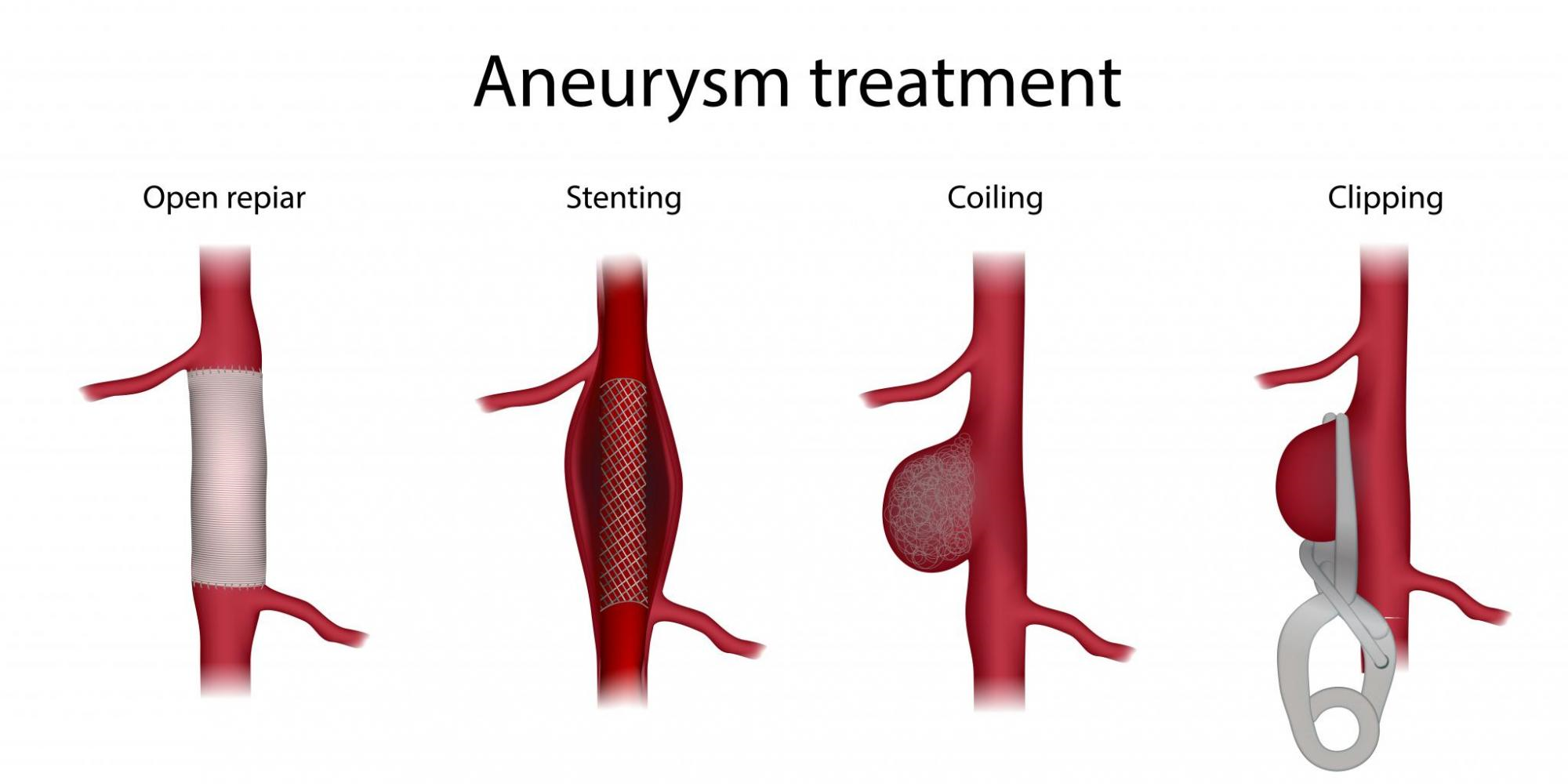
Vascular and Endovascular Neurosurgery focuses on the treatment of vascular diseases of the central nervous system and its supplying arteries. Most procedures are performed to treat bleeding-prone cerebrovascular disorders, such as aneurysms, angiomas, and dural arteriovenous fistulas. For the treatment of these conditions, a multimodal therapeutic approach is available, supported by highly advanced microsurgical and neurointerventional techniques, in which microsurgery, endovascular therapy, and neuroradiosurgery using Gamma Knife are coordinated and integrated.
Therapeutic concepts and strategies for the many cerebrovascular neurosurgical diseases treated at our clinic are presented and discussed within the framework of the interdisciplinary Vascular Board conference.
A dedicated specialized outpatient clinic for neurosurgical vascular and endovascular diseases provides expert preoperative and postoperative care for our patients.
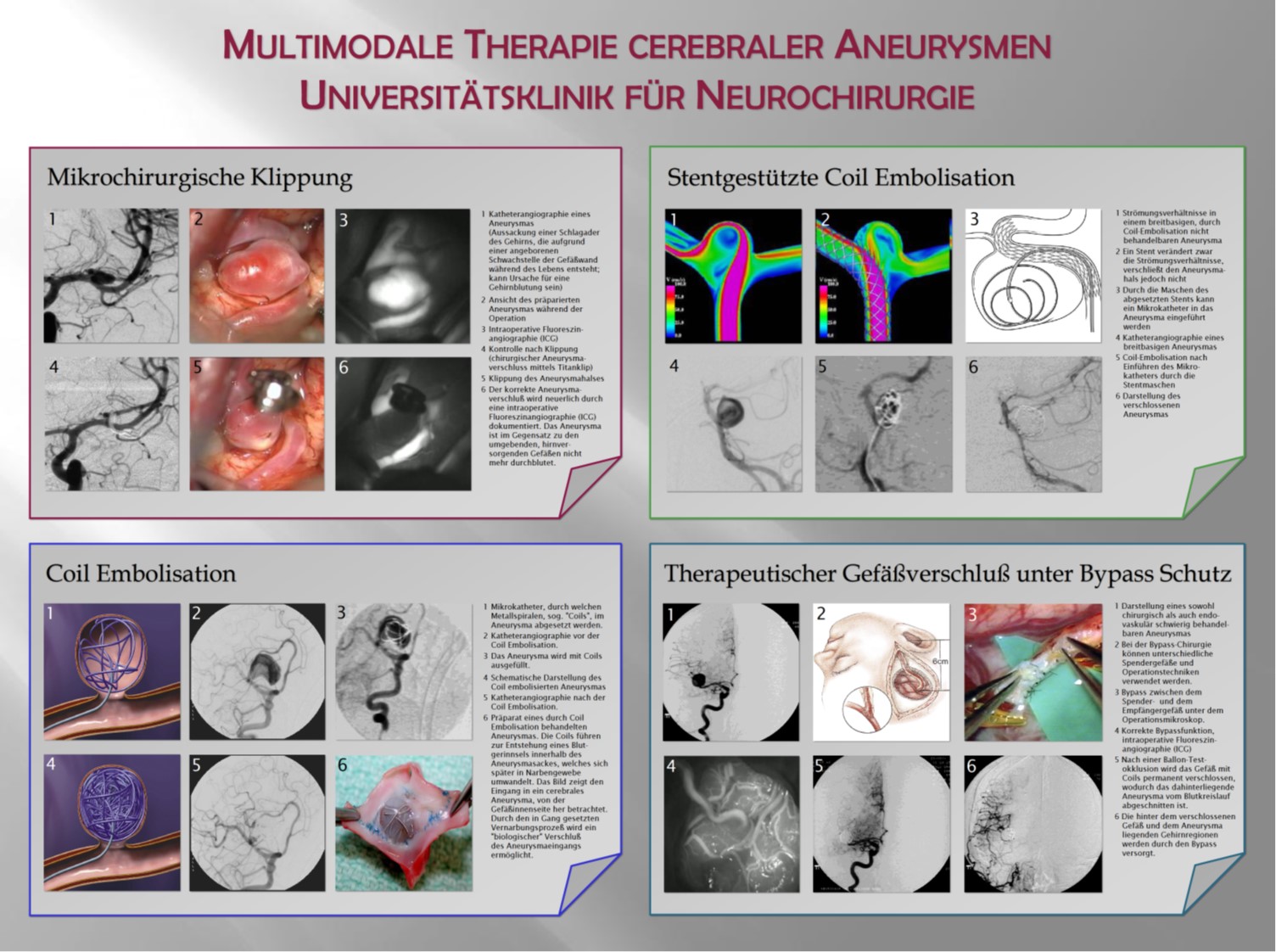
The treatment of cerebral aneurysms through surgical opening of the skull, known as a craniotomy, followed by the complete and permanent closure of the aneurysm neck using a metal clip, has been performed since 1937.
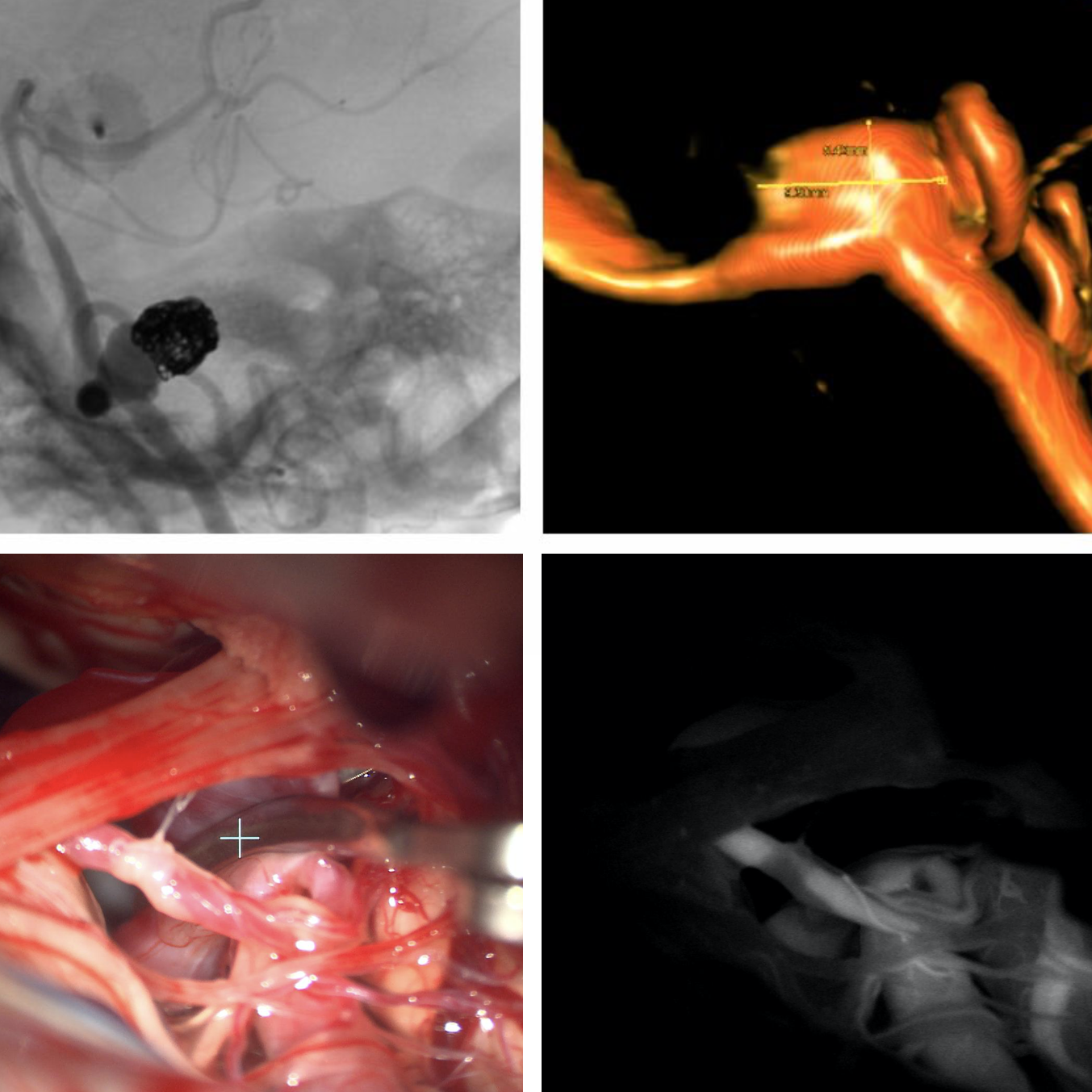
Microsurgical clipping of cerebral aneurysms has been further optimized through the use of modern intraoperative imaging techniques (before and after aneurysm closure), such as intraoperative angiography, indocyanine green (ICG) videoangiography, and 3D endoscopy, as well as advances in preoperative diagnostics and intensive care medicine. Every open, elective vascular operation is monitored using intraoperative neuromonitoring in order to increase procedural safety. These medical and technological advances have significantly contributed to making the microsurgical treatment of cerebral aneurysms safe and relatively low-risk today.
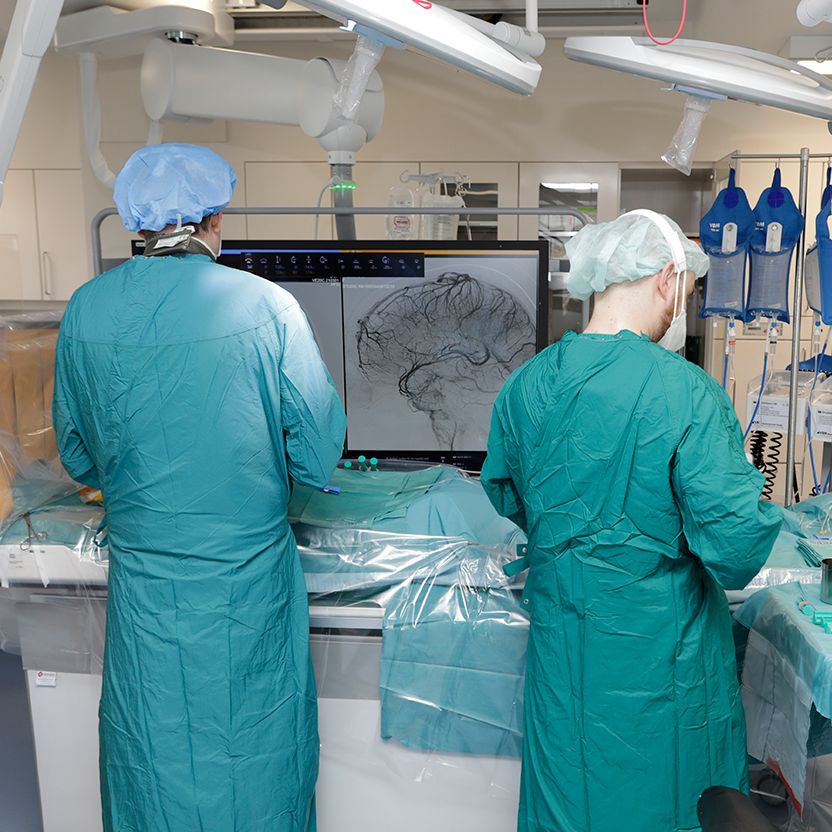
Endovascular treatment of cerebral aneurysms has been performed at the University Clinic of Neurosurgery in Vienna since 1983. Access to the aneurysm is not achieved through a surgical opening of the skull but from within the vascular system. For this purpose, the femoral artery in the groin is punctured and a soft plastic tube, known as a catheter, is advanced under fluoroscopic guidance through the vascular system to the carotid arteries supplying the brain. From this position, vascular imaging studies known as angiographies are performed.
Angiography is an examination method in which a contrast agent is injected through a catheter into the vessels supplying the brain under X-ray guidance, allowing both healthy and diseased cerebral vessels to be visualized. Through this catheter, a thinner catheter, called a microcatheter, is advanced into the aneurysm. The microcatheter delivers platinum coils, which are placed inside the aneurysm and stimulate blood clotting. Through clot formation and subsequent scarring, a “biological” closure of the aneurysm occurs, thereby preventing future aneurysm ruptures.
Endovascular therapy of cerebral aneurysms has been significantly expanded with the introduction of stent technology, allowing many aneurysms that were previously unsuitable for this technique due to their wide-neck morphology to now be safely treated with stent-assisted coil embolization or, increasingly, with the use of a modern flow-diverting stent (flow diverter) alone. To prevent the formation of blood clots within the stent, anticoagulant medication must be taken before and after the procedure.
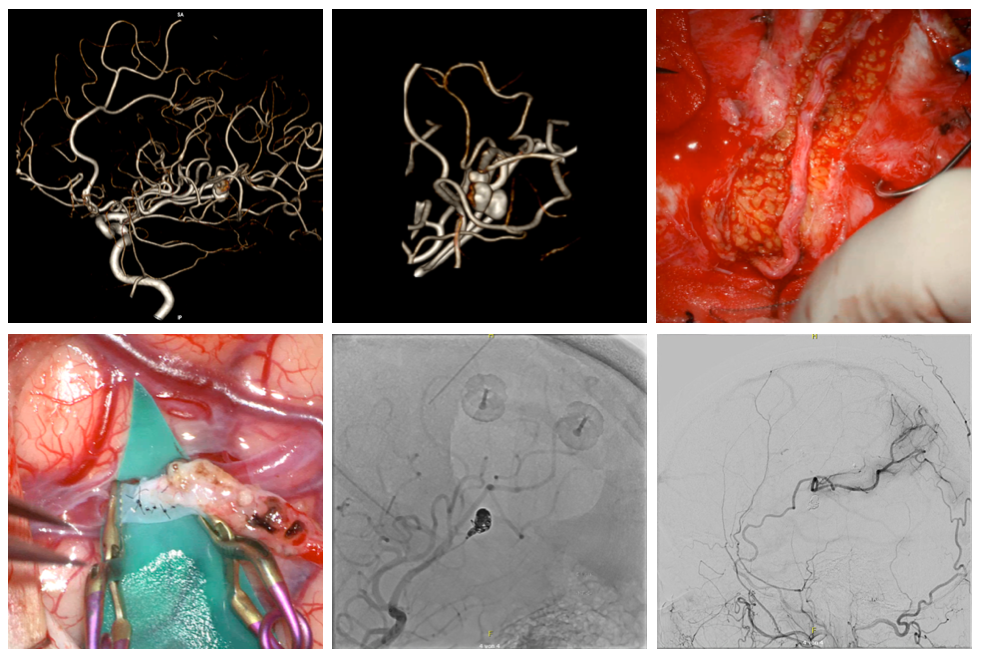
For the treatment of very large, so-called complex aneurysms, additional techniques are available. In these difficult cases, secure aneurysm occlusion is often only possible by closing the parent vessel under the protection of a bypass.
If the aneurysm cannot be safely treated either surgically or endovascularly while preserving the affected vessel, the aneurysm may be occluded together with the cerebral vessel from which it originated. Before performing this so-called therapeutic vessel occlusion, several precautions must be taken to prevent strokes and other serious neurological complications. Therefore, a bypass is created beforehand to ensure adequate blood supply to the brain tissue after the vessel has been closed.
In addition to the treatment of bleeding-prone cerebrovascular diseases, the management of ischemic cerebrovascular disorders, particularly stroke therapy, has become increasingly important in the context of an aging population and recent technological advances.
For the treatment of strokes caused by the occlusion of a cerebral vessel, both endovascular (thrombectomy) and microsurgical treatment options are available. In selected cases, a bypass procedure can also be performed to improve cerebral blood flow.
Clinical neuro/endovascular working group
Head:
Ao.Univ.-Prof. Dr.med.univ. Gerhard Bavinzski
Deputy:
Ap.Prof. Priv.-Doz. Dr.med.univ. Arthur Hosmann, PhD
Staff:
Dr.med.univ. Wei-Te Wang
Dr.med.univ. Dr.scient.med. Philippe Dodier
Mag. Dr.med.univ. Dorian Hirschmann
Dr.med.univ. Dr.scient.med. Anna Cho
Dr.med.univ. Wolfgang Marik (Universitätsklinik für Radiologie und Nuklearmedizin)
Ao.Univ.-Prof. Dr.med.univ. Wolfgang Serles (Universitätsklinik für Neurologie)